The Checklist Trap: Why Seeing Less Can Make a City Day Feel Fuller
A city day built around one anchor leaves room for streetside discoveries, unhurried meals, and local details that a packed sightseeing list tends to crowd out.

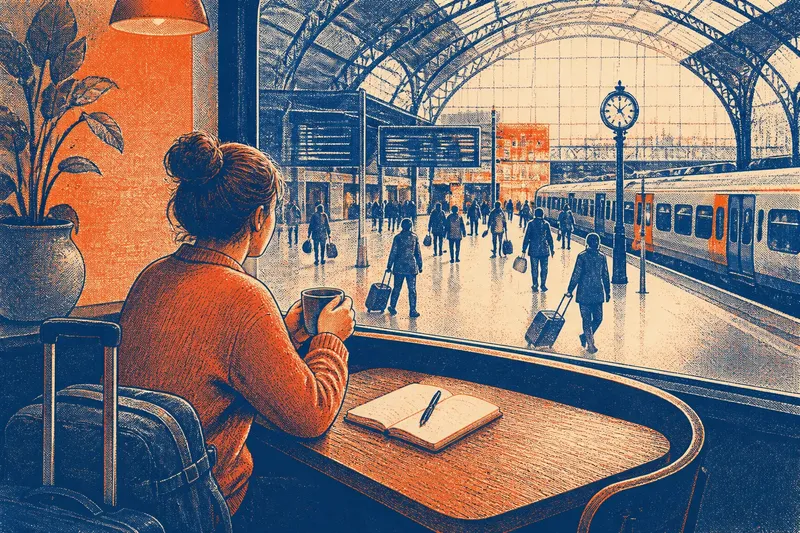
The usual mistake in planning a city day is treating every worthwhile sight as an appointment. A city day checklist can cost the day its texture: you remember the next departure time more clearly than the place you came to see. One anchor, with room around it, gives a visit shape without turning it into a relay race.
A city day needs a center, not a tally
An anchor is one place or experience that gives the day its direction. It might be the National Gallery, a long walk along the Chicago River, a particular neighborhood’s architecture, or an afternoon performance. The choice matters less than the fact that it is the day’s main reason for going out.
This is not an argument for doing nothing else. It is a way to let secondary plans remain secondary. A museum can take longer than expected; a street can be more interesting than its map suggests. When the anchor is the only fixed point, those changes do not automatically count as a failure.
Think of the anchor as the table in a room: it gives everything else a place to gather, but it does not need to fill every corner. The surrounding time is not a gap to repair. It is where a city becomes more than a sequence of named attractions.
Choose an anchor that can hold the day
Start with the kind of attention you want to give, rather than the number of places you can reach. A large art museum suits a day for looking closely and sitting down between galleries. A waterfront walk may fit better if you want changing views and the option to stop without an entry time. A neighborhood can be an anchor too, provided you have a reason to spend time there beyond collecting its name.
Check the practical shape of the choice before committing: opening hours, timed-entry rules, transit access, and whether the main activity is indoors or exposed to weather. These details help you decide whether the anchor belongs in the morning or later, and how much nearby wandering feels comfortable. For ticket conditions, accessibility information, and local transit rules, follow the relevant venue or transit operator.
Keep the rest of the plan loose. Choose a nearby area for lunch or a short walk, but avoid booking each one as though it were a separate obligation. Nearby matters because it lets the day develop without a fresh cross-city transfer becoming the price of every change of mood.
Use a short city day checklist to protect your time
A checklist can be useful if it checks the shape of the day rather than adding more destinations. For each item, note what you observe and let that determine the next decision.
- Check the anchor’s opening hours; if it is open when you can comfortably arrive, keep it as the center, but if not, choose another time or a different anchor.
- Check whether entry requires a timed reservation; if a suitable slot is available, plan around it, but if not, choose a walk-in option or another experience.
- Check transit access to the anchor; if the route is straightforward, use it, but if it requires an inconvenient cross-city detour, pick a closer anchor.
- Check whether the activity is indoors or exposed to weather; if the forecast suits it, keep the plan, but if conditions look uncomfortable, switch to an indoor alternative.
- Check for a nearby place to eat or pause; if one fits the day, leave it as an option, but if none does, bring a simple snack or choose a different district.
- Check how much fixed travel the day already contains; if the anchor remains the main commitment, leave the surrounding time open, but if transfers dominate, simplify the route.
Leave space without leaving the day to chance
Unplanned time works best when it has a gentle boundary. You might leave the hour after a museum visit open, while deciding in advance that you will stay in the same district. That gives you permission to follow an interesting side street, sit in a public square, or stop for coffee without needing to negotiate the whole itinerary again.
It also helps to have a short menu of low-effort options rather than a second checklist. Note a park, a bakery, or a covered passage near the anchor. These are possible places to pause, not destinations you must complete. If the weather turns or your attention runs out, a bench and a warm drink are valid uses of the afternoon.
Say you choose the Museum of Fine Arts in Boston as your anchor. In this invented situation, you first check its hours and entry conditions, then choose a visit time that fits; you note a nearby café and leave the rest of the afternoon unbooked. After the galleries, you notice you would rather sit than cross town, so you walk to the café and spend time watching the street. The resulting tradeoff is clear: you skip another attraction, but keep the museum as the day’s central experience and have room to notice its setting.
Why does seeing less feel like more?
Does one anchor mean skipping the famous sights?
No. It means choosing which famous sight gets your clearest attention on that particular day. Other places can remain options for another visit instead of becoming hurried stops that compete with the one you most wanted to see.
How do you avoid wasting open time?
Give open time a location and a few nearby possibilities, but no required sequence. A district, park, or stretch of river provides enough direction to make wandering feel deliberate without dictating what you must notice.
What if the anchor takes less time than expected?
Let the day expand locally before adding a distant attraction. A short walk, a meal, or a return to a room for a rest can be a better fit than adding another major stop simply because the schedule has room.
Is this approach useful on a short city visit?
Especially when time is limited, one central experience makes it easier to decide what deserves the available attention. Keep transport and any timed booking in view, then resist treating every remaining hour as unused capacity.
Notice the details a packed day edits out
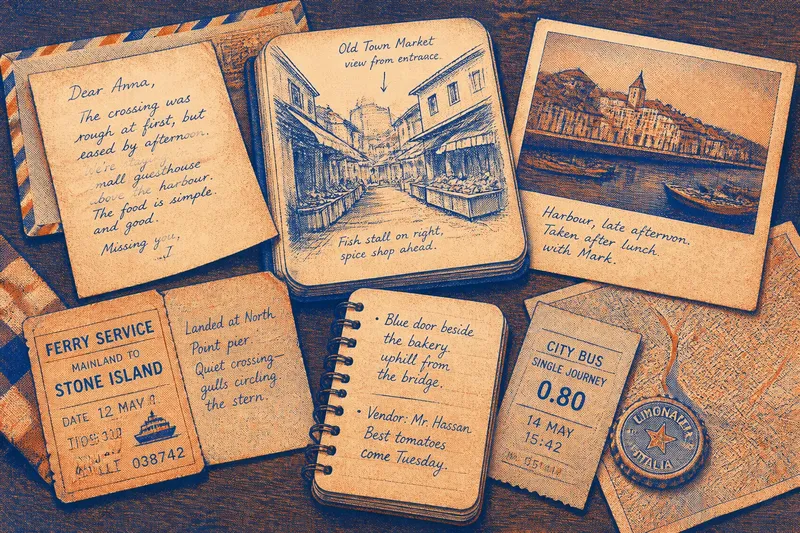
A slower day makes small signals easier to register: the sound changing between a busy avenue and a courtyard, the way shopkeepers set out chairs, or the light moving across a building while you eat. These are not prizes for being spontaneous. They are ordinary details that tend to disappear when attention is occupied by departure times and the next address.
There is a useful distinction between room and drift. Room means you can respond to what you encounter; drift means you have no sense of what would make the day feel satisfying. The anchor prevents drift, while the unbooked edges preserve room. If the day starts to feel vague, return to the question that shaped the anchor: what did you want to spend time noticing?
Judge the day by whether the central experience received the attention it deserved, not by how many map pins you covered. A fuller city day is often the one with enough space to remember a particular room, conversation, or corner. For your next city day, use the city day checklist to check the practical constraints, choose one anchor, and let the rest remain genuinely optional.